
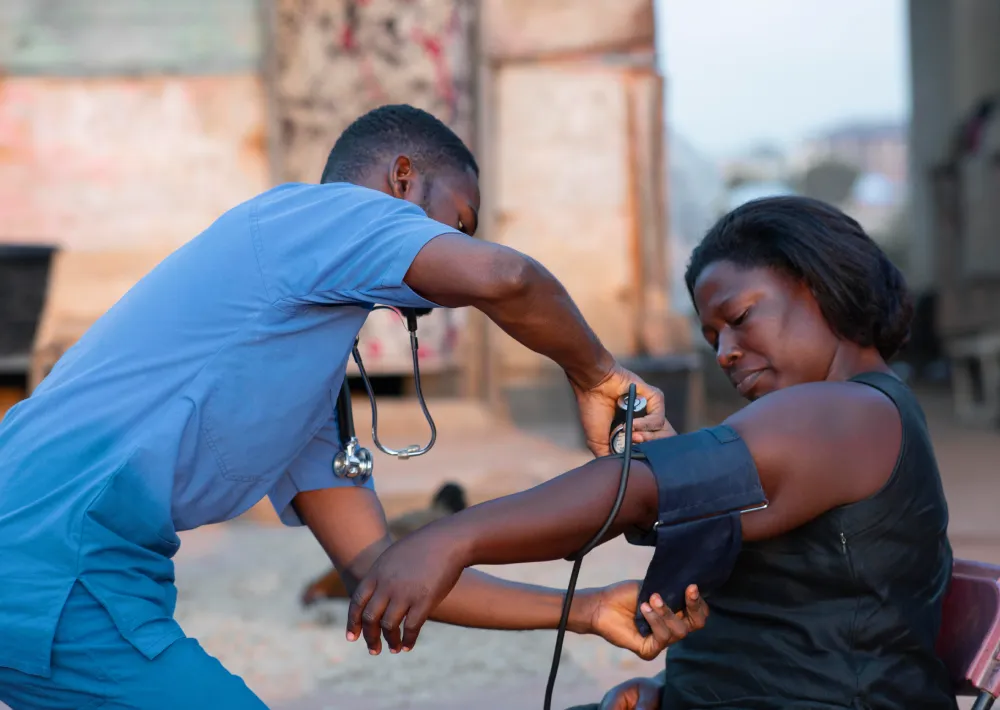
At AWA AFRICA, we believe that access to health is a fundamental human right — not a privilege. Our Health Outreach and Sexual Reproductive Health Rights (SRHR) program is designed to bridge the healthcare gap in underserved communities, especially for women, girls, and displaced populations.
Through mobile clinics, education, and community-based interventions, we ensure that essential health services reach those who need them most — when and where they need them.
We support mothers through every stage of pregnancy and beyond, offering antenatal and postnatal care to improve maternal and infant health outcomes. Our services include check-ups, nutritional guidance, and newborn care support.
Knowledge is power. We deliver community-centered education on:
Family planning and contraceptive options
Menstrual hygiene and dignity
Sexual health and rights
We work with women, girls, and adolescents to empower informed, confident choices about their bodies and futures.
Through group sessions and one-on-one counseling, we raise awareness about:
HIV/AIDS prevention and care
STI detection, treatment, and stigma reduction
General hygiene and preventive health practices
We bring healthcare directly to vulnerable populations through mobile clinics. These outreach services are lifesaving in hard-to-reach areas, IDP camps, and informal settlements where formal health infrastructure is absent or overstretched.
In many areas we serve, women and girls face barriers like distance, stigma, cost, and lack of information when seeking healthcare. Our program removes those barriers — ensuring access, promoting dignity, and protecting lives.
Hundreds of mothers supported with safe deliveries and newborn care
Thousands of young women reached with menstrual health and SRHR education
Community-wide reductions in stigma related to HIV, STIs, and reproductive health
Improved access to life-saving treatment in remote and crisis-affected communities


